Fast, Reliable Attic Insulation Across Crestline
Attic insulation in Crestline costs between $1,800 and $6,500 for a typical full-attic job, with blown-in cellulose or fiberglass running $1,800 – $3,200 and spray foam running $3,800 – $6,500 depending on square footage and existing material removal. Most Crestline homes we visit were built as mountain cabins or vacation properties decades ago, which means deferred maintenance and insulation that has given up after years of freeze-thaw cycles. We know the ridge roads, the canyon lots off Highway 138, and the older cabin stock along Lake Gregory Drive. We’re in Crestline every week. Call (866) 511-7592 for a free estimate and we’ll be up the hill within a day or two.
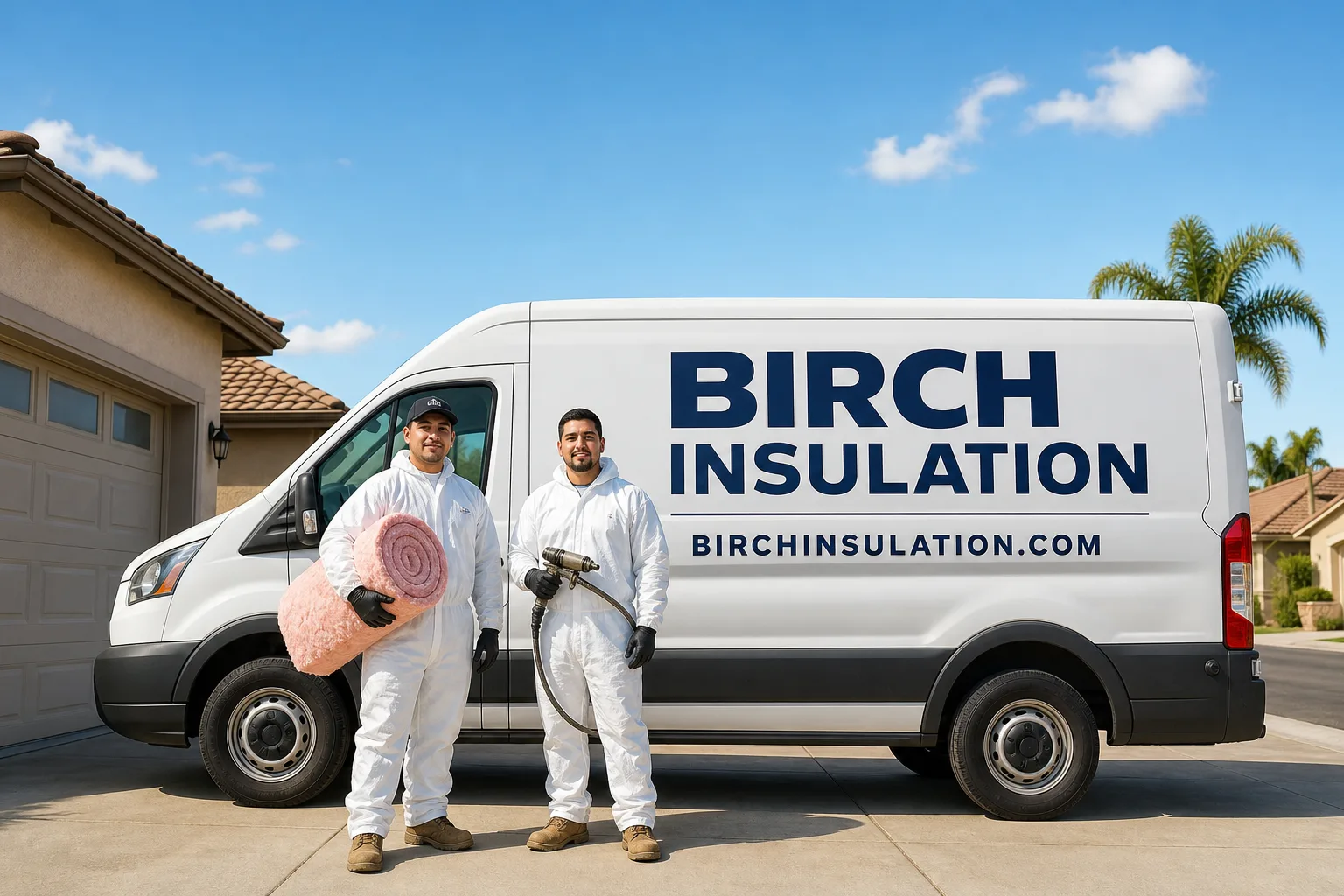
Our Attic Insulation team handles blown-in, batt, spray foam, and full replacement work, including baffles and ventilation prep. If you’re reading this because a room above the garage stays freezing in January or the upstairs bakes in July, the attic is where the problem lives. We’ll tell you what’s actually wrong and what it costs to fix, without pushing one material because it’s what’s on the truck.
Why Birch Insulation Is Crestline’s Preferred Attic Insulation Company
We work in Crestline roughly twice a week throughout the year, and more often in late summer and fall when wildfire inspection letters go out and homeowners discover their attic vents or insulation won’t pass. Our crews know the difference between a flat lot near Lake Gregory and a steep canyon parcel off Kenmore Drive or Waters Drive. That matters: venting requirements, access, and moisture behavior change block by block. We’ve handled attics in the Valley of Enchantment, the Twin Peaks side of Highway 189, and the older cabins up near Red Rock Road. Homeowners in Crestline keep calling us back because we show up when we say we will and we recommend the material that fits the house, not the one that fits our week.
Nate Crowley started Birch Insulation with the idea that a homeowner should get a straight answer about fiberglass versus mineral wool versus spray foam. That’s why we stock and install products from eight manufacturers, including Icynene, Demilec, GreenFiber, and Owens Corning. When a Crestline homeowner asks whether they should top up batt insulation or rip it all out and start fresh, our answer comes from looking at the attic, not from a sales script. Multi-brand access means we’re not nudging you toward one product line. We’re matching the product to your home’s construction, your budget, and Crestline’s mountain climate.
Several recent Crestline jobs involved attics where old fiberglass batts had sagged to half their original R-value after years of snowmelt moisture. Replacing that material brought immediate comfort changes: warmer bedrooms in winter, cooler afternoons in summer, and attics that finally dried out. We don’t subcontract any of the work. The crew that quotes your job is the crew that installs it.
Attic Ventilation in Crestline
Attic Ventilation in Crestline is the highest-impact upgrade most mountain homes never get, because at 4,500 feet a poorly vented attic turns snowmelt into trapped moisture that soaks insulation, rots roof sheathing, and invites mold. A typical venting correction here, including baffles, ridge or box vents, and soffit cleanup, runs $900 – $2,400 for a standard pitched roof cabin. Older flat or low-slope designs can push higher when roof decking has already deteriorated. The job involves clearing blocked soffits, installing baffles to keep insulation from choking airflow, and verifying that intake and exhaust are balanced for the slope and vegetation around your house.
Ember-Resistant Vents for High-Fire Zones
Venting isn’t just about moisture in Crestline; it’s about wildfire survival. Standard mesh louvers let embers through during a wind-driven event. Ember-resistant vent models use finer screening and baffled pathways that block most ember intrusion while still moving air. These run $18 – $42 per vent in materials and are worth installing whenever we’re already on the roof or in the attic. Some streets in Crestline face stricter inspection standards than others because slope and surrounding vegetation change ember exposure, so we spec venting block by block.
When Ventilation Is the Real Problem
We often show up for an insulation quote and find the real issue is no airflow. If your attic bakes at 130 degrees in August and the snow on your roof melts unevenly in January, ventilation is part of the fix. Adding insulation without fixing airflow just traps more moisture. We inspect vent layout, soffit depth, and existing baffle condition before recommending any material.
Radiant Barrier in Crestline
Radiant Barrier in Crestline makes sense for homes where summer heat hits the roof deck hard, especially south-facing and west-facing slopes that get late-afternoon sun off the San Bernardino Mountains. A typical attic radiant barrier installation here runs $1,200 – $2,800 depending on attic accessibility and whether we’re stapling to rafters or laying over existing insulation. Radiant barrier works by reflecting radiant heat before it reaches your insulation and living space, which reduces cooling load more than adding R-value alone. It isn’t a substitute for insulation; it complements it.
Pairing Radiant Barrier With Insulation Top-Up
In a Crestline cabin with 6 inches of tired fiberglass, the best result often comes from air-sealing the attic floor, topping up to R-38 or R-49, and adding a radiant barrier to the rafter line. That combination handles both halves of the mountain problem: cold nights that pull heat through the ceiling and hot afternoons that push heat down through the roof. We carry perforated radiant barrier that won’t trap moisture in attic assemblies, which matters in a freeze-thaw climate.
Radiant Barrier for Cathedral Ceilings
Crestline has a high share of homes with cathedral or open-beam ceilings, some with no attic cavity at all. In those cases radiant barrier installed under a roofing re-cover or in combination with unvented spray foam can be the only practical heat-rejection layer. We walk each roof before recommending anything; the slope, deck condition, and existing vent pattern determine what will work without creating a condensation problem.
Trusted Brands We Service in Crestline
We install and service the full range of residential insulation materials, which matters in Crestline because a 1950s cabin and a 2000s ridge house need different things. We use Icynene open-cell and closed-cell spray foam where air-sealing is the priority, Demilec where R-value per inch is critical, GreenFiber cellulose for a cost-effective top-up over old batts, and Owens Corning fiberglass for standard batt applications. Because we carry all of them, our recommendations come from what your attic actually needs. Parts and materials for Crestline jobs are typically staged in Rialto and brought up the hill on the install day, which keeps turnaround tight and means we rarely reschedule for supply runs.
Common Attic Insulation Problems We See in Crestline Homes
- Sagging and compressed fiberglass batts. Decades of freeze-thaw cycles and snowmelt dripping through poorly vented roof decks compresses batts to a fraction of their labeled R-value. We regularly find 10-inch batts that measure like R-19 instead of R-30 after 20 years in a mountain attic.
- Wet insulation that never dries out. Blocked or missing soffit vents trap moisture from snowmelt and forest humidity. Wet cellulose or fiberglass loses thermal performance and can grow mold against the ceiling drywall, which is a health concern we take seriously.
- Ember intrusion through outdated vents. Wildfire safety inspections in Crestline’s high-fire-severity zones frequently flag old mesh louvers and unsealed attic penetrations. Ember-resistant vent upgrades and air-sealing are often required before a home can pass or get insurance renewal.
- No air sealing at the attic floor. Tiny gaps around light fixtures, plumbing penetrations, and top plates stack up. In a mountain climate where the indoor-outdoor temperature difference swings 50 degrees or more, that stack effect pulls cold air in through the crawlspace and warm air out through the attic all winter.
Pricing for Attic Insulation in Crestline, CA
A full-attic insulation replacement in Crestline typically runs $2,200 – $5,200 for a 1,200 to 2,000 square foot home, including removal of old material, air sealing, and new R-38 to R-49 insulation. A top-up over existing but inadequate insulation runs $900 – $1,800. Spray foam on the roof deck for unvented assemblies runs $3,800 – $6,500 depending on foam type and deck area, and batt-grade Rockwool for fire-resistant applications usually lands in the $2,800 – $4,600 range for a similar footprint. Accessibility matters here: steep canyon lots and tight attic hatches add labor, not mystery fees. We quote every Crestline job as a fixed price after an attic inspection, and estimates are free. Call (866) 511-7592 to schedule one.
We Also Serve Cities Near Crestline
Besides our regular work in Crestline, we take care of attic insulation projects in Lake Arrowhead, Muscoy, San Bernardino, and Highland. If you’re up or down the hill from Crestline, our Attic Insulation in Crestline crew covers the same mountain and valley routes every week.
Serving Crestline, CA — Our Local Coverage Area
We’re based in the Crestline area and know this community well. Use the map below to see our service coverage — if you’re nearby, we can almost certainly help.
FAQs About Attic Insulation in Crestline
Crestline’s high-fire-severity zone designation means insulation choices should favor non-combustible or fire-resistant materials such as Rockwool mineral wool, and attic vents should be ember-resistant. We also recommend air-sealing every attic penetration to block ember entry. Call (866) 511-7592 and we’ll walk your attic with a wildfire-safety checklist.
Snowmelt and high forest humidity combine with poor attic ventilation or no ventilation at all, so moisture condenses and settles into the insulation, where it compacts and loses R-value. In many Crestline cabins, the original venting was never sized for real mountain snowfall. The fix starts with airflow, then insulation replacement. Call us for a free attic moisture assessment.
Yes, in most cases an unvented attic can be insulated correctly with closed-cell spray foam applied to the roofline, which creates an air and moisture barrier at the deck. This is a common retrofit in older Crestline cabins where adding soffit vents isn’t practical. We’ll confirm whether your roof deck and assembly can handle an unvented application before quoting.
For most vented attics in Crestline, we recommend an air-sealed attic floor with blown-in cellulose or fiberglass at R-38 to R-49. For cathedral ceilings, unvented roofs, or fire-sensitive lots, closed-cell spray foam or Rockwool batts are the stronger call. The right answer depends on your roof assembly, venting, and lot exposure. Call (866) 511-7592 for a material-matched recommendation, not a one-size-fits-all quote.
If your home has ice dams on the roof edges, cold rooms above the garage, visibly sagging batts in the attic, or drywall stains on the top-floor ceiling, the insulation has likely failed or is missing in key areas. In a Crestline cabin over 20 years old with original insulation, replacement is usually the better investment than another top-up. We’ll inspect and show you exactly what we find.
If your Crestline attic hasn’t been looked at in years, now is the time. We’ll inspect, give you a fixed quote, and get the work done on schedule. Call (866) 511-7592 for a free estimate.
Written by Nate Crowley, Owner at Birch Insulation, serving Crestline and the San Bernardino Mountains.