
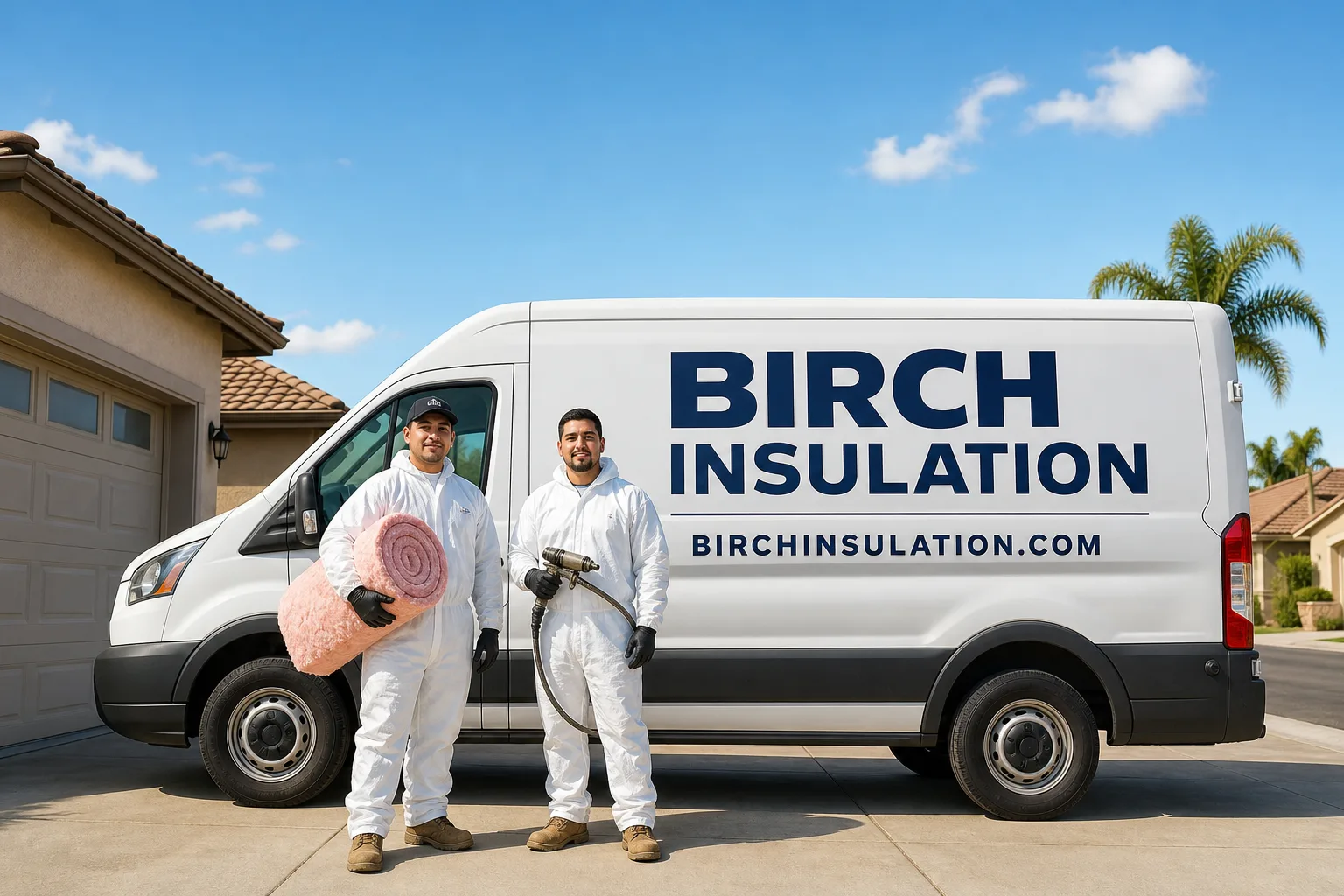
Spray Foam Insulation Contractors in Cabazon
Spray foam insulation contractors in Cabazon have to think about wind before they think about heat, and that flips the usual desert playbook. The San Gorgonio Pass doesn’t just cool the afternoon down – it drives sand and grit into attics, wall cavities, and manufactured home underbellies at speeds that scrub batt insulation into useless clumps. A 2,000-square-foot attic air-seal and closed-cell package in Cabazon typically runs $5,800 to $9,400, which covers sealing vent-adjacent framing, gable ends, and rim joists. Open-cell work in the same footprint lands between $3,200 and $5,600. The number moves with access, roof pitch, and how much of the existing insulation has to be pulled first.
Closed-cell at the gable framing
Here’s the Cabazon-specific detail that matters: closed-cell spray foam isn’t just an insulator in the pass – it’s the first physical barrier against wind-driven grit. When we spray closed-cell foam directly against gable vent framing and along the attic floor perimeter, sand stops at the foam line instead of sifting into the cellulose or fiberglass behind it. In a conventional Palm Springs attic, that sand would blow through the vents and settle; in Cabazon, the sand abrades whatever it touches, so a firm, closed-cell face is the only thing that holds up year after year.
Why the foam type matters more than the R-value
Homeowners in Cabazon sometimes ask why we don’t just add more blown-in fiberglass and walk away. The honest answer: in this wind corridor, air movement through the insulation itself erases most of that added R-value within a few seasons. Wind-washing across vented wall cavities facing the gap will strip loose-fill and batts down to dead zones in a single storm season. Spray foam bonds to the sheathing and framing, so there’s no air channel running through the material. That’s the whole point – higher nominal R-value means nothing if the wind is blowing through the assembly. If you’re weighing spray foam against traditional insulation for a Cabazon home, give us a call at (866) 511-7592 and we’ll walk you through what’s actually happening in your attic before you spend a dollar.
Open Cell Spray Foam in Cabazon
Open cell spray foam in Cabazon works best where the goal is air-sealing a hard-to-reach cavity, not just adding thermal resistance to a flat attic floor. In a manufactured home or an older single-family house off Seminole Drive or along the Apache Trail corridor, open cell earns its keep in the rim joists, under the floor deck, and across the skirting junctions where wind finds its way in. A typical rim joist and underbelly open-cell package on a Cabazon mobile home runs $1,800 to $3,400. The material expands into every gap, and unlike a cut-and-fit batt, it doesn’t leave a channel for pass wind to carve through. It’s not the highest R-value per inch – that’s closed cell’s job – but it’s the right tool when the problem is infiltration, not just heat gain.
Underbelly and skirting sealing
Manufactured and mobile homes in Cabazon have a particular failure pattern we see year-round: the factory underbelly loosens under repeated gale-force gusts, then dust packs into the floor cavity and the batts drift toward the far corner of the chassis. We re-secure the belly liner first, then spray open cell against the floor deck and rim joists and seal every skirting junction. Insulation under the floor only works when the air moving beneath the home stops; in the pass, that means re-fastening before foaming, every time.
Where open cell does the quiet work
Open cell also cuts noise transfer in Cabazon homes that sit close to the I-10 or the railroad corridor through town. The foam’s air-sealing properties dampen the constant low-frequency rumble that batts simply can’t touch. If your home faces the freeway side or the tracks, ask us about a hybrid approach: closed-cell at the wind-exposed gable framing, open-cell in the interior wall cavities where sound is the bigger concern. We’ll tell you plainly which one belongs where, based on what your house actually faces.
Why Birch Insulation Is Cabazon’s Preferred Spray Foam Insulation Company
Cabazon homeowners call us because we don’t bring a one-brand pitch to a wind-corridor problem. Birch Insulation stocks and installs both Icynene and Demilec spray foam, alongside fiberglass, mineral wool, and cellulose from five other manufacturers, so the foam recommendation comes from the home’s exposure, not from what’s cluttering our warehouse. When a Cabazon tech tells you this attic needs closed-cell against the gable vents, that’s a material decision driven by San Gorgonio Pass conditions. When a home needs open-cell under a manufactured floor, that’s also a material decision. Our team has worked enough homes between the pass and the 10 to know the difference on sight.
The other thing that separates us around Cabazon is that we handle the full insulation job in-house. Attic, blown-in, and spray foam – no subcontracting, no passing the customer around. The crew that shows up to seal your rim joists is led by Nate Crowley, our owner, who’s been doing this long enough to call out wind-washed batts from the attic hatch before the ladder’s fully set up. Response time to Cabazon is same-day when the schedule allows, with most calls answered and a crew routed within one to two business days.
We’re not going to tell you we’re the biggest spray foam operation in Riverside County. We’ll tell you we’re the ones who know what the pass does to insulation, and we’ll back that up with a material-matched recommendation you can actually watch us install. Call (866) 511-7592 and ask for Nate.
Fast, Reliable Spray Foam Insulation Across Cabazon
Cabazon’s spot in the San Gorgonio Pass wind gap means spray foam does double duty here: it has to stop heat moving through your ceiling in July, but it also has to stop sand, grit, and gale-force drafts moving through your attic, walls, and underbelly in every other month. That’s the part most insulation contractors from outside the pass don’t plan for. We do. Spray foam insulation in Cabazon has to perform as an air-sealing wind barrier first and a thermal layer second – close the air paths, and the R-value finally does its job. Birch Insulation has been installing open-cell and closed-cell foam in Cabazon homes long enough to know exactly where the wind finds them.
If you’re standing in a Cabazon living room right now with dust on the windowsill, a floor that won’t hold temperature, and an energy bill that doesn’t match the thermostat – that’s the pass working against your insulation. We route crews to Cabazon throughout the week, and you can reach us directly at (866) 511-7592 for a free estimate.
Trusted Brands We Service in Cabazon
We carry both Spray Foam Insulation lines that matter in Cabazon: Icynene for open-cell and Demilec for closed-cell and exposed roof-deck work. That dual-line setup matters in the pass because a single-brand foam contractor will try to make one product solve every problem – and in a wind corridor, it can’t. For Cabazon homes where spray foam isn’t the right call at all – say, a rental property on a tight budget – we can also specify GreenFiber cellulose for a recycled-content option, or Owens Corning fiberglass where vented attics stay dry and sealed. The point is we stock local parts and materials for Cabazon jobs, so the turnaround is fast and we’re not ordering foam from a distributor three days out after the first site visit.
Common Spray Foam Insulation Problems We See in Cabazon Homes
- Wind-washed batts in vented wall cavities facing the gap: The pass wind runs through the vent channel and across the face of the fiberglass, stripping the loft and leaving dead zones in the wall. Cabazon homes need spray foam fully bonded to the sheathing to stop that convection path for good.
- Sand and grit sifting through attic and gable vents: Dust settles into loose-fill and abrades the fibers until the whole layer loses effective R-value. Closed-cell foam laid against the gable vent framing creates a face that sand stops at, instead of sifting through.
- Manufactured home underbellies peeling loose under repeated gusts: Once the belly liner separates, gusting air fills the floor cavity and pushes batts into the far corner. The repair sequence is re-secure the belly, then foam the rim and floor deck – not the other way around.
- Dust-clogged exhaust and vent baffles in attic spaces: Airborne grit accumulates at the baffle edges and reduces attic ventilation over time. Spray foam around the baffle edges and vent framing keeps the airflow path clear and prevents sand from finding a shortcut into the insulation layer.
Pricing for Spray Foam Insulation in Cabazon, CA
We Also Serve Cities Near Cabazon
Beyond Cabazon, our crews serve Spray Foam Insulation in Cabazon neighbors in Banning, Calimesa, Yucaipa, and Lakeview. The wind and sand conditions shift a little as you move east toward the Coachella Valley floor, so we adjust the foam spec accordingly – but the pass still dictates every job in this corridor.
Serving Cabazon, CA — Our Local Coverage Area
We’re based in the Cabazon area and know this community well. Use the map below to see our service coverage — if you’re nearby, we can almost certainly help.
FAQs About Spray Foam Insulation in Cabazon
Cabazon needs a different spray foam spec because the San Gorgonio Pass wind gap drives sand and grit through attic and gable vents year-round, abrading and clogging insulation long before its nominal R-value rating would suggest. Palm Springs a few miles east sits in still desert air, so its attics deal with heat but not wind-washing. In Cabazon, closed-cell foam against gable vent framing and gasketed penetrations matter more than adding extra inches of R-value.
Yes – open-cell spray foam under the floor deck and around the rim joists stops the air movement that strips heat from the living space and lets dust pack the floor cavity. The key step is re-securing the belly liner and skirting first, then foaming the junctions so gale-force gusts can’t peel the underbelly loose again. Call (866) 511-7592 for a mobile home underbelly inspection before the next heavy wind event.
Wind-washed batts in Cabazon attics look deflated and uneven, with sand-packed patches near the gable vents and bare framing visible where the wind has scoured the material away. The batts often look decades older than their actual age. In floor cavities of manufactured homes, you’ll find the batts pushed into one corner of the chassis with dust caked into the fibers.
Cabazon sits in unincorporated Riverside County, so spray foam jobs follow Riverside County building standards, which include wind-resistance provisions tied to the pass’s exposure classification. Closed-cell spray foam against gable framing and sealed penetrations meet the air-barrier expectation for wind-driven dust and moisture. We handle the permit paperwork as part of the job, so you’re not sorting through county requirements on your own. Call (866) 511-7592 and we’ll check your specific address.
Closed-cell spray foam is better for Cabazon’s wind and sand exposure at the perimeter and vent-adjacent framing because it creates a firm, sand-stopping face and adds structural rigidity to wind-loaded walls. Open-cell is better for floor cavities, rim joists, and interior wall air-sealing where the priority is stopping infiltration and sound transfer. Most Cabazon homes get a material-matched combination of both, not one or the other. Call (866) 511-7592 to find out which assembly fits your home.
Who Can Help With Spray Foam Insulation in Cabazon?
If you need spray foam insulation in Cabazon, call Birch Insulation at (866) 511-7592. We’ll ask you about where the drafts come from, what the attic looks like, and whether the home is stick-built or manufactured – then we’ll give you a straight answer on materials and cost. Free estimates, same-week scheduling when possible. We serve all of Cabazon and the 92230 zip code, plus the surrounding pass communities.
Written by Nate Crowley, Owner at Birch Insulation, serving Cabazon and the San Gorgonio Pass corridor.