Fast, Reliable Attic Insulation Across La Habra Heights
Attic insulation in La Habra Heights costs $1,800 to $3,400 for a full reinsulation on a typical hillside home, with top-ups running $900 to $1,600. We work the canyon and ridge lots off Hacienda Road and Whittier Boulevard most weeks, which means we show up already knowing what your attic is doing wrong before we even open the hatch. Call (866) 511-7592 for a straight answer and a same-week appointment.
La Habra Heights is not a tract-home city. The homes here are owner-built, semi-rural, and built around horse property and hillside grade. That changes how insulation fails and how it needs to be installed. The standard one-size-fits-all attic job does not hold up to Santa Ana wind drift, open eave lines, and vaulted exposed-beam ceilings. This page explains what actually happens in La Habra Heights attics, what it costs to fix, and why we handle the work differently than a contractor who mostly services flat suburban lots.
Why Birch Insulation Is La Habra Heights’s Preferred Attic Insulation Company
We’re the company homeowners call after the first insulation contractor gives them a vague quote and a brand they’ve never heard of. Birch Insulation carries eight manufacturers across fiberglass, mineral wool, spray foam, and cellulose. That matters here because La Habra Heights attics are not uniform. A 1970s owner-built home with vaulted exposed-beam ceilings off Hacienda Road needs a different assembly approach than a 1980s ranch in Fullerton. We recommend the material the job needs, not the one we happen to stock the most of.
Our crews know the La Habra Heights failure patterns: blown-in insulation drifted to the leeward side of the attic, bare windward edges above living spaces, open eave penetrations pulling hot afternoon air through the envelope. Homeowners here tend to be hands-on and direct. They ask specific questions about R-value, air sealing, and fire performance. We answer with specific numbers and material names. That’s why people in this city call us back for the detached workshop, the garage, the second structure after we finish the main house.
Nate Crowley leads the team and holds a simple standard: the recommendation has to be defensible if the homeowner asks why. If you want to know why Rockwool is the right call at your canyon-facing eave line, we’ll tell you the exact reason. If GreenFiber cellulose makes more sense for your budget on a standard vented attic, we’ll say so. Call us at (866) 511-7592 and you’ll get an answer, not a sales pitch.
Attic Cleaning Services in La Habra Heights
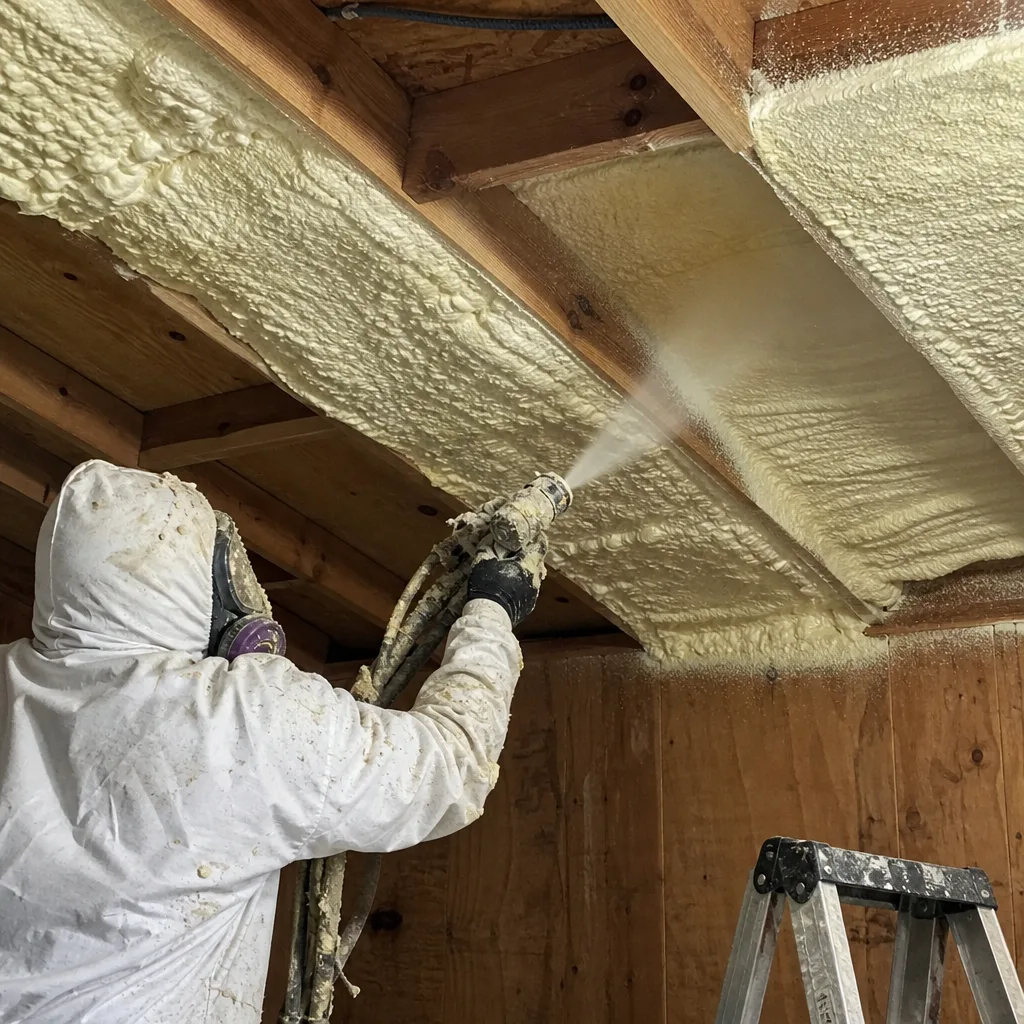
Attic Cleaning Services in La Habra Heights mean something different than they do in a coastal tract city. The open eave lines on hillside homes funnel wind-blown debris, dust, and ember-sized particulate into the attic cavity all summer. Santa Ana events make it worse. We remove the contaminated or compacted blown-in material, clean the deck and framing, then address the air sealing before any new insulation goes back in. A typical attic cleaning in La Habra Heights runs $400 to $900 depending on access and how much debris has accumulated.
Wind-Driven Debris Removal
Canyon and ridge lots produce attics full of fine dust, leaf litter, and rodent debris pushed in through open eaves. We HEPA-vacuum the deck, remove old batts or blown-in if they’ve been contaminated, and prep the cavity for new work. You get a clean surface, which means the new insulation actually sits flush and performs at its stated R-value.
Pre-Insulation Prep and Air Sealing
Before any new insulation goes in, the penetration points need to be sealed. In La Habra Heights, that usually means open eave vent gaps, plumbing stacks, and wiring chases through top plates. We air-seal those openings with foam or caulk before the insulation goes down. Skipping this step is how you end up with a freshly reinsulated attic that still leaks heat into the living space.
What happens when you call
- 1
A real person answersNo phone trees — you reach a local pro.
- 2
You get an upfront price rangeHonest numbers before anyone is dispatched.
- 3
A background-checked tech heads outLicensed & insured, dispatched right away.
- 4
You approve before work beginsNothing starts until you say go.
Attic Mold Removal in La Habra Heights
Attic Mold Removal in La Habra Heights usually traces back to two local conditions: poor attic ventilation combined with winter condensation, or wind-driven moisture entering through open eave lines during rain events. Homes on north-facing slopes and heavily treed canyon lots are the most prone. We treat the affected framing with antimicrobial cleaning, correct the ventilation or air-sealing issue that caused the mold, and then reinsulate. Attic mold remediation in La Habra Heights typically runs $900 to $2,200 depending on the affected square footage.
Ventilation Correction Before Reinsulation
Mold keeps coming back if the attic can’t dry out. On La Habra Heights hillside homes, the fix often involves reconfiguring eave and ridge vents so the attic actually exchanges air. We shuffle baffles, clear blocked soffit vents, and confirm airflow before any new insulation touches the deck. The mold is a symptom; the ventilation is the cause.
Antimicrobial Treatment and Deck Cleaning
We clean the mold from framing and deck with a commercial antimicrobial solution, not just paint it over with stain. On exposed-beam ceilings, which are common in the 1960s to 1980s La Habra Heights builds, mold can travel along the beam pockets where they meet the insulation boundary. We treat those transition points so you’re not chasing the same bloom a year later.
Trusted Brands We Service in La Habra Heights
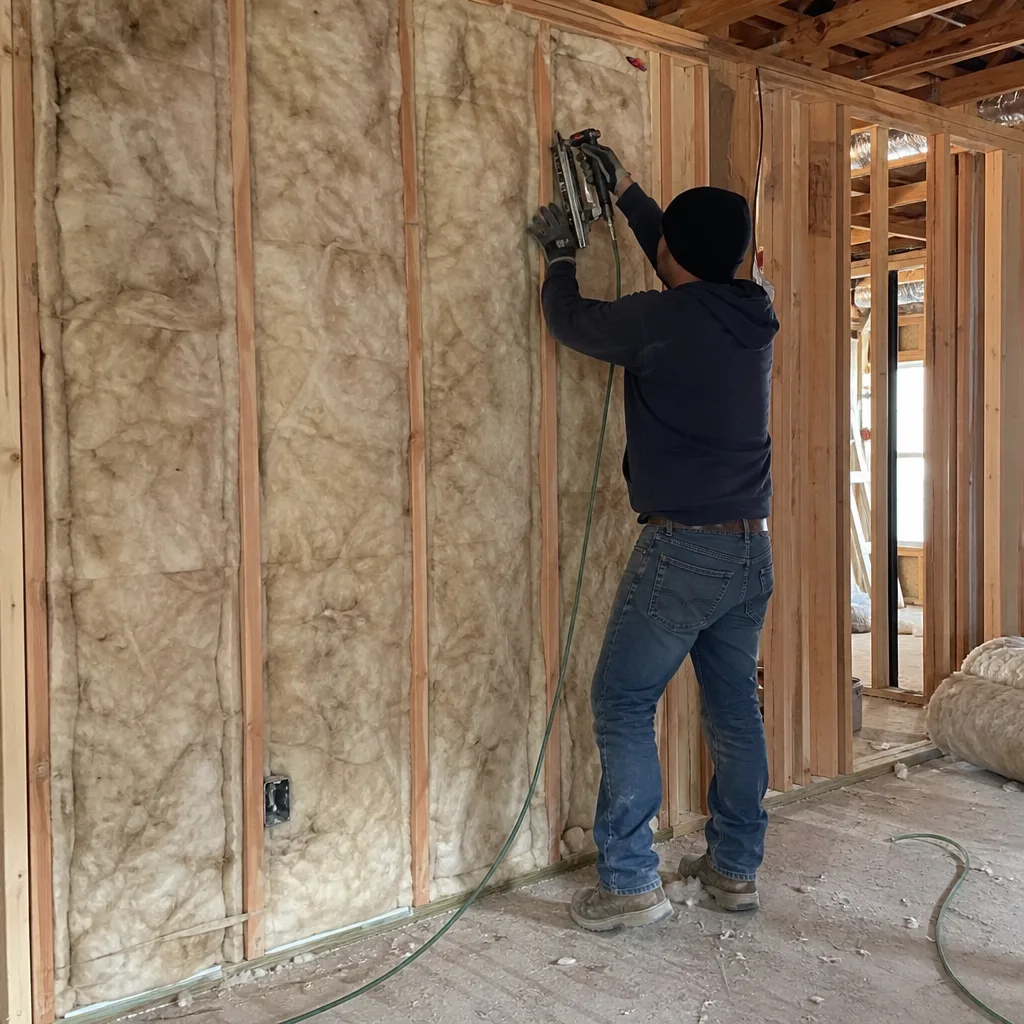
We’re brand-agnostic, which means you get a recommendation that fits your attic, not our inventory spreadsheet. For La Habra Heights homes with ember-exposure concerns on windward ridge lines, we often spec Rockwool mineral wool because it’s noncombustible and resists the wind-driven fire conditions this city faces. For standard vented attics where budget is the driver, GreenFiber cellulose gives strong coverage per dollar. And Owens Corning fiberglass remains a workhorse for top-ups and standard reinsulation jobs where weight and coverage matter. We stock parts and materials locally, so turnaround on La Habra Heights jobs doesn’t stall waiting on a supplier run across the county.
Our Attic Insulation work in La Habra Heights draws from all eight manufacturer lines, but the three above are the ones homeowners on these hillside lots ask about most. We carry everything, but we don’t use everything on every job. The house decides what it needs.
Common Attic Insulation Problems We See in La Habra Heights Homes
- Drifted blown-in at the windward eave line. On canyon and ridge lots off Hacienda Road and Whittier Boulevard, Santa Ana gusts push loose-fill insulation toward the leeward side, leaving bare hot-spot zones directly above the living room. This is the single most common issue we find and it’s nearly invisible until someone checks the attic on a hot afternoon.
- Unsealed open eave penetrations. The open eave construction common in 1960s to 1980s La Habra Heights builds pulls hot air and debris into the attic cavity. The attic becomes a heat radiator, and whatever insulation is up there is fighting a losing battle against the airflow passing over it.
- Vaulted exposed-beam ceiling assemblies. Owner-built homes with exposed beams create irregular insulation boundaries that don’t match standard batt dimensions. Gaps at beam pockets and knee walls leak conditioned air constantly, which is why some rooms in the same house run 10 degrees warmer than others.
- Detached workshops and outbuildings ignored by typical scopes. Many La Habra Heights properties have a separate shop or garage with its own attic boundary, and single-pass attic-only scopes miss it entirely. That building becomes an unconditioned heat sink, and if it shares a wall or roofline with the main house, it drags down overall performance.
Pricing for Attic Insulation in La Habra Heights, CA
A standard attic reinsulation in La Habra Heights runs between $1,800 and $3,400, depending on square footage, access difficulty, and whether we’re removing old material first. Attic top-ups, where we add fresh insulation over existing but compacted material, typically cost $900 to $1,600. Attic cleaning and air sealing before insulation adds $400 to $900. Mold remediation, which includes antimicrobial treatment and ventilation correction, spans $900 to $2,200. The largest cost driver in this city is the irregular assembly: vaulted ceilings, exposed beams, detached workshops, and wind-displaced insulation all add labor hours. We give free estimates with a written line-item quote, and we’ll tell you exactly what’s driving the number. Call (866) 511-7592 to get one scheduled.
We Also Serve Cities Near La Habra Heights
Based in Rialto but working the hillside corridors regularly, we serve La Habra Heights and the surrounding cities including La Habra, Fullerton, Rowland Heights, and Hacienda Heights. If your home sits on one of the ridge lines we drive every week, you’ll get the same local knowledge and material-matched approach. Learn more about our Attic Insulation in La Habra Heights coverage or call us directly at (866) 511-7592.
Serving La Habra Heights, CA — Our Local Coverage Area
We’re based in the La Habra Heights area and know this community well. Use the map below to see our service coverage — if you’re nearby, we can almost certainly help.
FAQs About Attic Insulation in La Habra Heights
Santa Ana winds enter through the open eave lines on canyon and ridge lots, push loose-fill insulation across the attic deck, and leave it drifted against the leeward knee wall while the windward edge sits essentially bare. That bare zone above your living space is where the heat gets through. We fix it by air-sealing the eave penetrations, then re-leveling the insulation boundary, often with Rockwool at the windward edge so it stays put. Call (866) 511-7592 and we’ll schedule an attic inspection to confirm what’s happening in your specific roofline.
Yes, significantly. Vaulted exposed-beam ceilings create a nonstandard boundary between conditioned and unconditioned space, and the beam pockets, knee walls, and irregular rafter bays leak air in ways a flat-ceiling attic never will. Standard batt insulation doesn’t simply lay into these assemblies. We map the actual thermal boundary and use a combination of air sealing, rigid or mineral wool where ember resistance matters, and blown-in where the cavity is deep enough. Your beam ceiling isn’t a problem; it’s a different assembly that needs a different material approach.
Yes, and on La Habra Heights acreage properties that’s the standard approach. We scope the detached workshop, garage, or studio at the same time as the main house and quote both together. Most of these outbuildings have completely uninsulated attics or old compressed batts, and treating them separately means paying for a second mobilization. We do the full property in one trip.
Rockwool mineral wool is the strongest choice for the ember-exposed windward edges on canyon and ridge lots. It’s noncombustible, doesn’t ignite or sustain smoldering, and resists the wind-driven conditions that push embers into open eave lines. We’the same material we spec on the windward edge when we find drifted blown-in and bare decking. For homes further from the wildland boundary, GreenFiber cellulose with a Class 1 fire rating is a solid budget-conscious option.
Usually yes, and in La Habra Heights specifically the old insulation is often wind-compacted or contaminated with dust and debris anyway. We remove it, inspect the deck and framing, address air sealing at the eave penetrations, and then install new material to a level, verified depth. Leaving the old compacted material and blowing over it traps the air-sealing problem underneath. The removal is included in our full reinsulation quote, not billed as a separate surprise. Call (866) 511-7592 to talk through your attic’s condition.
Written by Nate Crowley, Owner at Birch Insulation, serving La Habra Heights and surrounding hillside communities since day one of Birch.