Attic Insulation in Spring Valley Lake, CA: What It Costs and What Actually Works Here
Attic insulation in Spring Valley Lake typically runs $1,800 to $4,600 for a full upgrade on a 1,200 to 2,000 square foot home, with radiant barrier adding $0.80 to $1.50 per square foot and attic ventilation work running $600 to $1,900 depending on vent count. Most jobs take one day. The real question isn’t just cost, though. It’s whether the material you choose can survive the specific punishment this lake community dishes out: triple-digit summer attic temperatures, near-freezing winter nights, and lake humidity that corrodes foil barriers and vent screens faster than anywhere else in the Victor Valley.
We’re Birch Insulation, and we’ve spent years working in the 92395 ZIP code. We know why a 1980s tract home off Spring Valley Lake Parkway needs something different than a house in Victorville. Call us at (866) 511-7592 for a free estimate, or keep reading if you want the straight answer on what your attic actually needs.
Why Birch Insulation Is Spring Valley Lake’s Go-To Attic Insulation Team
Spring Valley Lake isn’t just another high-desert community. It’s a private lake surrounded by 1970s through 1990s tract homes, and the HOA-controlled environment means homes here age in a very specific way. The combination of relentless desert sun and the moisture coming off that man-made lake creates a microclimate where standard attic insulation advice doesn’t always hold. Nate Crowley leads our crew, and he’s built our approach around matching material to the actual conditions your home faces, not whatever is easiest to stock.
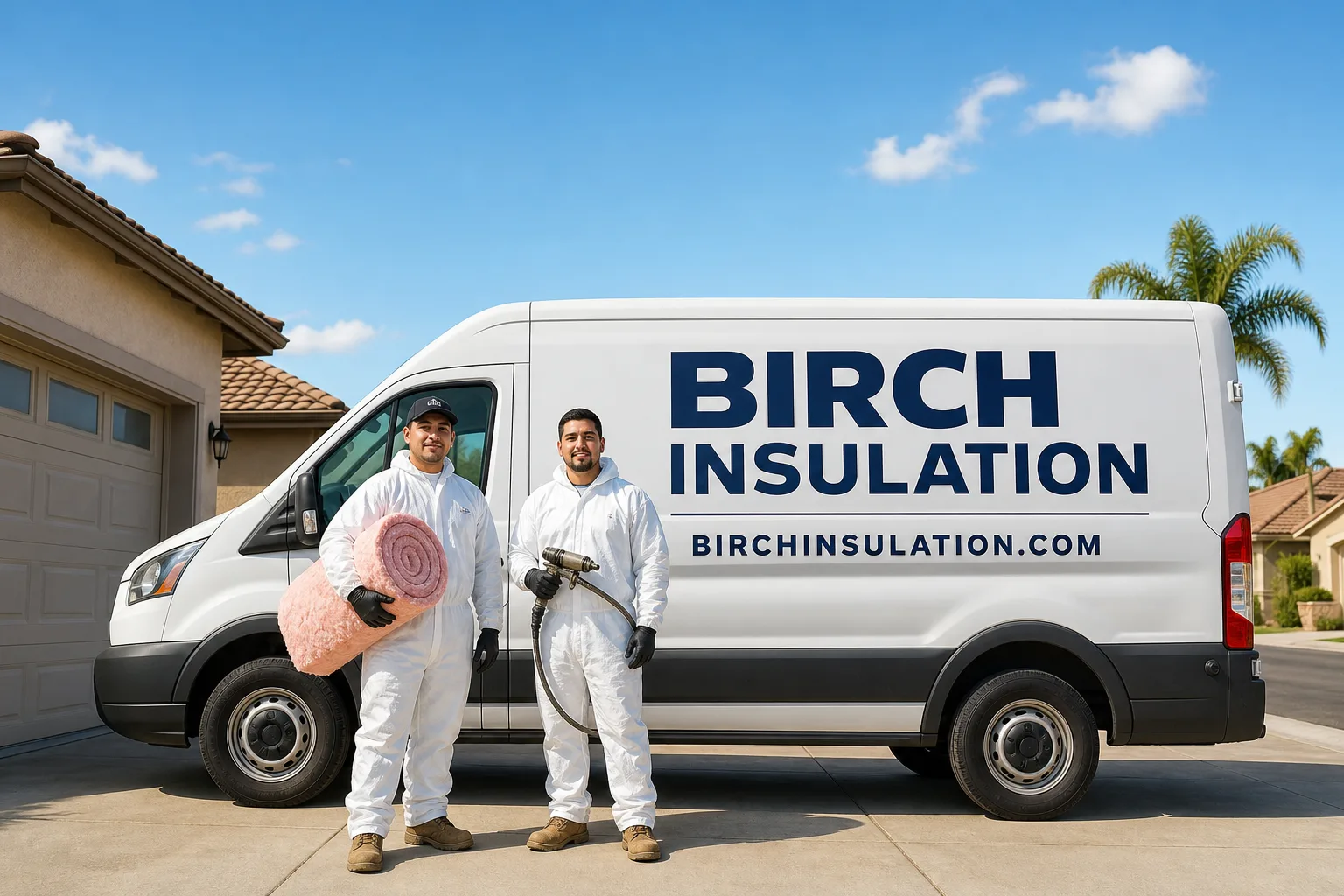
Our Attic Insulation team handles every job in-house. No subcontractors, no day laborers. That matters when you’re dealing with the kind of precision work that radiant barrier installation and ventilation retrofits demand in a corrosive environment like Spring Valley Lake.
We’re not the contractor who shows up with whatever fiberglass is on sale. We carry eight manufacturers, which means we can put Owens Corning R-38 in one attic, rockwool in another, and an Icynene spray foam air seal in a third. The home decides the material. The homeowner’s budget sets the boundaries. We just tell you the truth about both.
Response time to Spring Valley Lake is same-day for inspections in most cases. We keep our schedule built around the Victor Valley, so we’re not driving from San Bernardino when you call.
Attic Ventilation in Spring Valley Lake
Attic Ventilation in Spring Valley Lake is a more urgent issue than in neighboring Victorville because those lake breezes carry humidity straight into vent screens and exhaust openings, where desert dust collects and clogs airflow over time. In July, a poorly ventilated Spring Valley Lake attic can hit 140°F. That heat radiates down through your ceiling and forces your AC to run constantly. The fix is calculating the correct net free ventilation area for your attic footprint, then installing the right mix of intake and exhaust vents, with materials chosen specifically for this lake environment.
Corrosion-Resistant Vent Screens
Lake humidity is the silent killer of attic vent screens in Spring Valley Lake. Cheap galvanized screens rust through within three to five years when exposed to the moisture coming off the water combined with desert dust that holds that moisture against the metal. We replace intake vents with stainless or heavily coated screens that stand up to the specific conditions along the lake perimeter. It’s a small material cost difference that quadruples the service life.
Ridge and Soffit Vent Upgrades for Lakefront Homes
Homes closer to the water see more aggressive corrosion and also more heat stress because of how the sun reflects off the lake surface onto rooflines in the afternoon. That’s where we specify corrosion-resistant ridge vents with internal weather filtering, paired with properly baffled soffit intake. The goal is continuous airflow from low to high, moving the superheated air out before it cooks your insulation.
Radiant Barrier in Spring Valley Lake
Radiant Barrier in Spring Valley Lake matters more than in most of high-desert California because the attic heat gain here is extreme, with summer roof deck temperatures exceeding 140°F every single day from June through September. A radiant barrier stapled to the underside of the rafters reflects most of that heat before it reaches your insulation and living space. But here’s the Spring Valley Lake twist, the lake humidity corrodes cheap foil barriers at the staple points within a few years, causing them to peel and delaminate. Material grade matters more here than inland.
Perforated Radiant Barrier for Attic Humidity Control
We always specify perforated radiant barrier in Spring Valley Lake, not the cheaper unperforated variety. The perforations allow moisture vapor to pass through instead of condensing on the foil surface, which is exactly what happens near a lake when cold insulation meets hot, humid attic air. A non-perforated barrier in this climate becomes a condensation trap. That’s a failure waiting to happen. The perforated product costs slightly more and is absolutely the right call for this particular community.
Corrosion-Protected Fastener Systems
Standard steel staples rust through in Spring Valley Lake because the humidity off the lake, combined with the temperature cycling that creates micro-condensation on metal surfaces, accelerates oxidation. We use coated, corrosion-resistant fasteners for every radiant barrier installation here. On a 1980s tract home near Spring Valley Lake Parkway, our crew found the original radiant barrier foil peeling from corrosion at the staples, the foil itself losing reflectivity and value. We installed new perforated barrier with upgraded fasteners and the difference was immediate.
Common Attic Insulation Problems We See in Spring Valley Lake Homes
- Corroded radiant barrier foil. That shinny foil under your rafters is delaminating at the fastener points because lake humidity is oxidizing the steel staples and the foil edge. Once it tears and sags, it stops reflecting heat and becomes dead material in your attic.
- Sagging, R-value-dead fiberglass. Original 1970s through 1990s R-11 or R-19 batts lose their loft over decades of 100°F days and near-freezing nights. The fiberglass compresses, the binder breaks down, and the effective R-value drops below code minimums even though it “looks fine.”
- Clogged and corroded vent screens. Desert dust coats the screen mesh, then lake humidity wets that dust, and within a few seasons the screens are blocked and rusting. That stalls passive attic airflow and turns your attic into an oven.
- Radiant barrier peeling from staples. This is the uniquely Spring Valley Lake failure. Homes that added radiant barrier in the 1990s or 2000s using inland-standard steel staples and cheap foil are now seeing the barrier peel away from the rafters like wallpaper. The staples rust through, and the barrier loses its performance.
Pricing for Attic Insulation in Spring Valley Lake, CA
A full attic insulation replacement on a typical Spring Valley Lake home, meaning 1,200 to 2,000 square feet, runs $1,800 to $4,600 depending on material grade and attic accessibility. Adding a radiant barrier layer to the rafters adds roughly $0.80 to $1.50 per square foot. Ventilation work, including ridge, soffit, or gable vent replacement with corrosion-resistant products, runs $600 to $1,900 depending on how many openings need work. Homes closer to the water, where we need to use higher-grade corrosion-resistant fasteners and screens, tend toward the upper end of these ranges. Top-ups on existing insulation run $1,100 to $3,000. If you want a firm number on your specific attic, call (866) 511-7592. Estimates are free and take about 30 minutes on site.
We Also Serve Cities Near Spring Valley Lake
Our crew works throughout the Victor Valley. We regularly handle Attic Insulation in Spring Valley Lake, along with projects in Mountain View Acres, Victorville, Apple Valley, and Hesperia. If you’re just outside the lake community boundaries but dealing with the same desert heat, call us at (866) 511-7592 and we’ll tell you if we cover your street. Chances are, we do.
Serving Spring Valley Lake, CA — Our Local Coverage Area
We’re based in the Spring Valley Lake area and know this community well. Use the map below to see our service coverage — if you’re nearby, we can almost certainly help.
FAQs About Attic Insulation in Spring Valley Lake
The lake humidity in Spring Valley Lake accelerates corrosion on metal attic components, especially radiant barrier foil, fasteners, and vent screens, reducing their lifespan by 30 to 50 percent compared to inland high-desert homes. It also introduces condensation risk that makes perforated radiant barrier and proper vapor management essential here. Not all insulation is affected the same way, fiberglass and mineral wool handle humidity better than foil products, but the foil and metal components need corrosion-resistant upgrading. Call (866) 511-7592 and we’ll walk you through what’s in your attic and what needs upgrading.
Radiant barrier is more important in Spring Valley Lake than in coastal California because our summer attic temperatures routinely hit 130 to 140°F while coastal attics rarely exceed 110°F, meaning the heat gain benefit is dramatically larger here. The physics are simple: radiant barrier reflects heat, and the more heat present, the more good it does. Spring Valley Lake’s combination of extreme heat gain and huge day-night temperature swings makes radiant barrier the cheapest performance upgrade per dollar for most homes here. Call (866) 511-7592 for a free attic assessment.
Fiberglass batts at R-38 to R-60, properly air-sealed, work best for Spring Valley Lake’s temperature swings because they perform consistently across both hot and cold weather without sagging or settling. Spray foam works well too, especially for air sealing the attic floor, but it’s a bigger investment. For homes closer to the water, we often recommend adding mineral wool in problem areas because it resists moisture and doesn’t lose R-value if condensation occurs. The right answer depends on your specific attic, but the wrong answer is cheap R-19 fiberglass from a big-box store. Call (866) 511-7592 and we’ll tell you what your attic actually needs.
Attic vents should be inspected every 18 to 24 months in Spring Valley Lake because the combined dust and lake humidity environment clogs and corrodes vent screens faster than in Victorville or Apple Valley. Most homeowners never inspect their vents until there’s a problem, and by then the attic has been running hot for a season or more. We check vent screens, baffles, and airflow as part of every attic assessment. Call (866) 511-7592 to schedule a free inspection.
Yes, original 1970s insulation in Spring Valley Lake homes can be upgraded without full removal by blowing cellulose or fiberglass over the existing batts to reach R-38 or R-49, provided the old material is not compressed, moldy, or rodent-damaged. If the original batts have sagged and lost their loft, which is common in Spring Valley Lake’s extreme temperature swings, removal is usually the better long-term move and not much more expensive. We’ll tell you which approach makes sense for your attic, and it’s always your call. Call (866) 511-7592 for a free assessment.
Written by Nate Crowley, Owner at Birch Insulation, serving Spring Valley Lake and the Victor Valley with material-matched attic insulation solutions.