Insulation Company in March Air Force Base, CA
Blown in insulation is the most common retrofit we install in March Air Force Base because it fills irregular attic cavities fast and delivers immediate relief from the Inland Empire heat that pounds these roofs from May through October. Homes in the 92551 ZIP code run hot in summer, and most were built between the 1950s and 1980s with attic insulation that has settled, compressed, or was thin from day one. Birch Insulation has served March Air Force Base since 2015, and we carry blown-in fiberglass and cellulose from manufacturers like GreenFiber and Owens Corning so the material matches your home, not our inventory. Call (866) 511-7592 for a free estimate.
Why March Air Force Base Homes Are Different
March Air Force Base sits in the semi-arid Riverside basin, where summer temperatures routinely top 100°F and the solar load on roofs is relentless. Attic temperatures climb well past 140°F on a July afternoon, and that heat doesn’t stay in the attic. It radiates down into living spaces, forces air conditioners to run longer, and pushes cooling bills up through late September. Santa Ana wind events add another layer: hot, dry gusts press against the building envelope and find every gap around ducts, top plates, and recessed lights.
The housing stock compounds the problem. March ARB-era military family housing and post-war tract homes in the March and Valley-Windsor areas were built to mid-century insulation standards, which means R-11 or less in many attics. Original blown insulation from that era settles, compacts, and loses its R-value over decades. Add aging single-pane windows to the mix, and these homes work harder than they should to stay comfortable. The contrasting world here is the base itself: hangars, shops, and warehouses with industrial insulation requirements tied to temperature and humidity control for equipment, not just occupant comfort. Contractors working on base navigate access, security, and federal facility standards that don’t apply anywhere else in the Inland Empire, which is why most insulation companies stick to one side of the fence. We handle both.
Our Main March Air Force Base Services
Most March Air Force Base homeowners call us for two things: getting their attic insulation up to a level that actually handles a Riverside summer, and sealing air leaks that undermine whatever insulation is already up there. Here’s how each works here.
Attic Insulation in March Air Force Base
Attic insulation here is a heat-load problem first. A poorly insulated attic in March Air Force Base turns into a heat reservoir by mid-morning, and the fix is raising the R-value across the entire attic floor, not just spot-treating thin areas. We remove or top off existing material, seal the air leaks that let conditioned air escape from the house below, and install new insulation to a level appropriate for this climate. For most homes in the 92551 area, that means upgrading to an R-38 or higher attic floor. Read more about how we handle this: Attic Insulation in March Air Force Base.
Spray Foam Insulation in March Air Force Base
Spray foam earns its cost in March Air Force Base when homeowners want more than a thermal layer, they want an air seal. Open-cell spray foam applied to the attic roofline turns that unconditioned, 140°F space into a semi-conditioned buffer zone that dramatically reduces heat gain. Closed-cell foam works where moisture, structural strength, or maximum R-value per inch matter. On the base side, spray foam also handles the sealing demands of large utilitarian buildings where air leakage drives energy waste. For the full breakdown of what foam does in this climate: Spray Foam Insulation in March Air Force Base.
What happens when you call
- 1
A real person answersNo phone trees — you reach a local pro.
- 2
You get an upfront price rangeHonest numbers before anyone is dispatched.
- 3
A background-checked tech heads outLicensed & insured, dispatched right away.
- 4
You approve before work beginsNothing starts until you say go.
Blown In Insulation in March Air Force Base
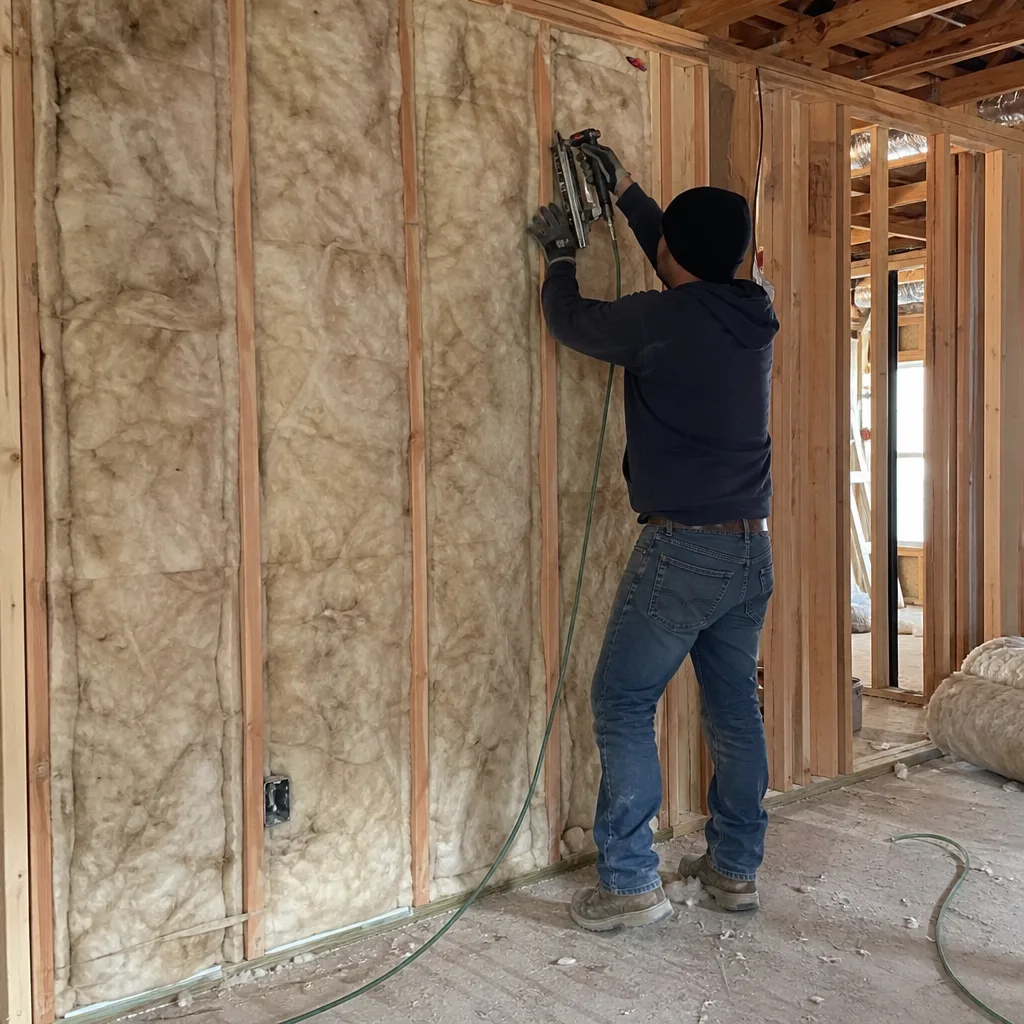
Blown in insulation is the workhorse retrofit for March Air Force Base attics because it conforms to every irregularity, covers the hard-to-reach edges and bays, and can be installed in a day. Most of the 1950s through 1980s homes around March and Valley-Windsor have attics with settled or patchy original insulation, and blown-in fiberglass or cellulose is the most efficient way to bring them up to current code levels without tearing out drywall. We stock Blown In Insulation from multiple manufacturers, including GreenFiber cellulose for homeowners who want recycled content and Owens Corning fiberglass for consistent, stable R-value over time.
Cellulose Insulation
Signs you need it
Your attic has settled, thin, or crumbling insulation less than 6 inches deep.
What it costs in March Air Force Base
Blown-in cellulose in March Air Force Base typically runs $1.10 to $1.60 per square foot installed, depending on depth and attic access.
How we do it
We air-seal penetrations, mark target depth, and blow GreenFiber cellulose to the specified R-value using calibrated equipment for consistent coverage.
Blown In Fiberglass Insulation
Signs you need it
Your attic insulation is compacted, full of gaps, or you notice warm ceilings and rooms that never hold temperature.
What it costs in March Air Force Base
Blown-in fiberglass in March Air Force Base typically runs $0.90 to $1.50 per square foot installed for standard attic depths.
How we do it
We prep the attic by sealing bypasses, install ventilation baffles where needed, and blow fiberglass to the depth required for the target R-value, checking coverage with depth markers.
Loose Fill Insulation
Signs you need it
Your existing attic insulation is uneven, settled below the tops of joists, or missing entirely in hard-to-reach corners.
What it costs in March Air Force Base
Loose fill insulation projects here generally fall between $1,000 and $2,600 for a typical single-story attic, depending on square footage and depth.
How we do it
We assess existing material, determine what can stay and what should come out, then blow loose fill to a consistent, code-meeting depth across the full attic floor.
What Blown In Insulation Costs in March Air Force Base
| Item | Typical range in March Air Force Base |
|---|---|
| Blown-in fiberglass (attic floor) | $0.90 – $1.50 per sq ft installed |
| Blown-in cellulose (attic floor) | $1.10 – $1.60 per sq ft installed |
| Full attic loose fill retrofit (typical home) | $1,000 – $2,600 total |
Does blown in insulation work in high-heat attics like March Air Force Base?
Yes. Blown-in cellulose and fiberglass both perform well here when installed at sufficient depth, which for this climate means an attic floor between R-38 and R-49. Proper air sealing before blowing is what keeps conditioned air from escaping.
How long does a blown in insulation job take in March Air Force Base?
Most March Air Force Base attic-only jobs are done in 4 to 6 hours, including prep and cleanup. Larger homes or attics needing old material removal take longer. Call (866) 511-7592 to schedule an assessment.
Brands We Service in March Air Force Base
We install products from Icynene, Demilec, GreenFiber, and Owens Corning, and we keep the most-requested blown-in materials readily available for March Air Force Base jobs. That means common cellulose and fiberglass projects get scheduled without waiting on special orders. See the full lineup on our brands page.
Pricing for Insulation Company in March Air Force Base, CA
| Service | Typical range in March Air Force Base |
|---|---|
| Blown-in fiberglass (attic floor) | $0.90 – $1.50 per sq ft installed |
| Blown-in cellulose (attic floor) | $1.10 – $1.60 per sq ft installed |
| Loose fill full attic retrofit | $1,000 – $2,600 total |
| Attic floor air sealing (before insulation) | $0.30 – $0.60 per sq ft |
| Spray foam, open-cell (roofline) | $1.80 – $3.00 per board ft |
| Spray foam, closed-cell | $2.50 – $4.50 per board ft |
| Blown-in wall insulation (existing walls) | $1.20 – $2.00 per sq ft of wall area |
| Attic insulation removal | $1.50 – $3.00 per sq ft |
| Duct insulation wrap | $1.50 – $2.50 per linear ft |
The numbers above shift based on attic access, existing material condition, and the depth required to hit the R-value this climate demands. Hot attics on older March Air Force Base homes sometimes need removal first, which adds cost but prevents new insulation from being compromised by old, contaminated material. Every quote we give is line-item and upfront, and the price we quote is the price you pay.
Neighborhoods We Serve in March Air Force Base
Our crews work across the full 92551 area, from the residential streets off Van Buren and Cactus to the on-base housing areas near the airfield. We also handle base facility projects where access can be arranged. Typical response time for a free estimate anywhere in March Air Force Base is 24 to 48 hours.
- March ARB family housing
- Valley-Windsor
- March neighborhood (north of Cactus)
- Base flightline and support facility areas
- Riverside-adjacent 92551 corridor
Service Area – Cities Near March Air Force Base
Birch Insulation serves homeowners across the surrounding Riverside basin, so if you’re just outside March Air Force Base, we likely cover your area too. We regularly work in Moreno Valley, CA, Woodcrest, CA, Perris, CA, and Good Hope, CA. Call (866) 511-7592 to confirm your address is in our service area.
Serving March Air Force Base, CA — Our Local Coverage Area
We’re based in the March Air Force Base area and know this community well. Use the map below to see our service coverage — if you’re nearby, we can almost certainly help.
FAQs About Insulation Company in March Air Force Base
For most residential estimates in March Air Force Base, we’re on site within 24 to 48 hours of your call. Emergency insulation needs, like after a roof leak or animal intrusion, get prioritized. Call (866) 511-7592 and tell us what’s going on.
Yes. We’ve worked on base facilities and on-base housing in March Air Force Base since 2015, and we coordinate with facility managers and follow required access, badging, and scheduling protocols. Off-base residential jobs in 92551 have no special requirements.
Most residential attic insulation retrofits don’t require a permit in the county’s unincorporated and base-adjacent areas, but larger remodels that touch the building envelope may. On-base facility work follows its own federal facility process, which we navigate for each project. Call (866) 511-7592 and we’ll tell you what applies to your specific job.
What happens when you call
- 1A real person answersNo phone trees — talk to a local insulation pro.
- 2You get an upfront price rangeHonest numbers before anyone is dispatched. No surprises.
- 3A background-checked tech heads outLicensed & insured, typically within 60-minute.
- 4You approve before work beginsNothing starts until you say go.
What March Air Force Base Customers Say
"Attic was at maybe R-11 from the 1970s and blown in over the top would have just buried the problem. They removed the old material, air sealed the top plates and penetrations first, then blew in to R-49. The upstairs is a completely different house in August."
— Neil Hayes"He did a blower door test before and after and gave me the numbers. I like being able to see the difference rather than being told about it."
— Allen Kim"Installed baffles at the soffits so the new insulation didn't block the ventilation, which the previous contractor apparently never considered."
— Katie Whitaker