
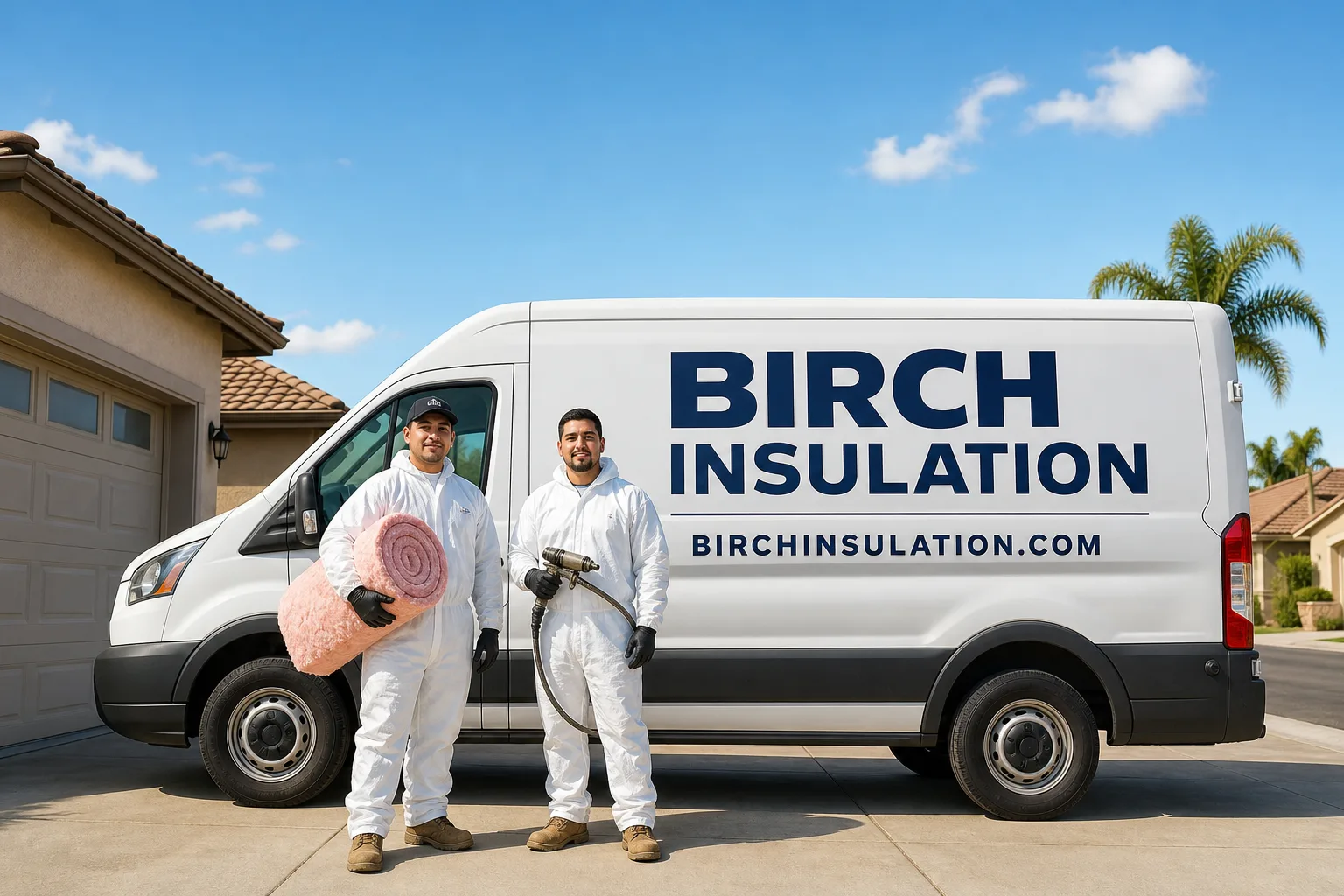
Fast, Reliable Spray Foam Insulation Across Highland
Spray foam insulation in Highland typically runs $2,400 – $6,800 for a full attic application, and most jobs take one to two working days once prep is complete. We’re based in Rialto, so our crews reach most Highland neighborhoods within 30 – 40 minutes, and we keep sealed-foam jobs scheduled year-round because Highland’s summer heat doesn’t wait. If you’re in the 92346 flats or the foothill-adjacent streets near the base of the San Bernardino Mountains, call (866) 511-7592 and we’ll give you a straight answer on cost before anyone steps foot in your attic.
Highland homes need a specific kind of spray foam work. The postwar tracts that dominate this city weren’t built for 100°F-plus summers, and their original fiberglass batts have been quietly failing for decades. We know this because we see it every week on jobs in Highland, from Base Line Road up toward the mountain grades.
Key Takeaways
- Spray foam installation in Highland usually costs $2,400 – $6,800 depending on attic size and foam type.
- Most Highland homes from the 1950s – 1980s have sagging fiberglass batts that need removal before foam goes in, not just a top-off.
- Open-cell and closed-cell foam serve different purposes here; we’ll tell you which fits your specific roof deck and budget.
- We carry both Icynene and Demilec spray foam, so you’re not locked into one manufacturer’s spec.
- Same-week scheduling is available for most Highland zip code 92346 addresses.
Why Birch Insulation Is Highland’s Preferred Spray Foam Insulation Company
Our reputation in Highland comes from solving the problems other contractors skip over. When a homeowner on Cole Avenue or near Highland Avenue calls about a hot upstairs bedroom, most companies quote a quick fiberglass blow-in and leave. We look at what’s actually happening in the attic first. In the older tracts, that usually means finding batts that have pulled away from the ceiling joists, bare drywall patches radiating heat into the living space, and top plates that were never sealed when the house was built. Spray Foam Insulation done right addresses all three.
Nate Crowley started Birch Insulation to carry the right material for each home rather than pushing whatever’s loaded on the truck. That matters in Highland, where a 1958 ranch has very different needs than a stucco-clad infill home built in 2015. We stock open-cell and closed-cell foam from both Icynene and Demilec, plus fiberglass, mineral wool, and cellulose from six other manufacturers, so the recommendation comes from your attic’s condition and your budget, not from a brand agreement.
Our crews work in Highland several times a week. We know the roof pitch variations on the older east-west ranches, the tight access hatches in the bedroom hallways, and the venting patterns on the foothill-adjacent builds. That local familiarity means fewer surprises on install day and a cleaner finished attic.
Spray Foam Insulation Contractors in Highland
Spray Foam Insulation Contractors in Highland handle something more involved than a simple material swap. This is a job where failed fiberglass gets removed, gaps get sealed, and foam goes onto the roof deck with an eye toward Highland’s extreme temperature swings. A full attic spray foam installation in Highland typically runs $2,400 – $4,800 for open-cell and $3,500 – $6,800 for closed-cell, with the final number driven by square footage, roof pitch, and how much old insulation has to come out first. You need a contractor when your attic has settled batts, visible drywall gaps, or rooms that won’t hold temperature in summer or winter.
Open-cell in Highland attics
Open-cell foam works well on vented attics, which covers most of Highland’s 1950s – 1980s ranch stock. It expands to fill the joist cavities and seals air leaks without trapping moisture, which matters when your attic sees 140°F days and 40°F nights in the same season. We use Icynene’s open-cell product for these jobs because of its proven air-sealing performance in hot-climate vented attics.
Closed-cell for roof decks
When a Highland homeowner wants to convert a vented attic to an unvented, conditioned space, closed-cell foam is the right call. We spray Demilec closed-cell directly to the roof deck and seal the top plates, creating an air barrier that stops radiant heat gain before it reaches the living space. This is the upgrade that fixes persistent hot-ceiling problems in single-story ranches.
Spray Foam Attic Insulation in Highland
Spray Foam Attic Insulation in Highland is where we do our most important work, because the city’s housing stock is aging and the summers are brutal. The 92346 flats were largely built between 1950 and 1980, and the original R-11 to R-19 fiberglass batts in those attics have compressed, settled, and pulled away from ceiling joists after decades of thermal cycling. Homeowners call us when ceiling surfaces feel hot to the touch in July, when upstairs bedrooms run 8 – 12°F warmer than the rest of the house, or when they can see bare drywall between joist lines from the attic hatch. A full attic spray foam job in Highland runs $2,400 – $6,800, and that includes removing the failed material, not just burying it.
Removing failed fiberglass first
We don’t spray foam over sagging batts. Foam applied on top of fiberglass that has pulled away from the joists traps air gaps underneath and leaves hot drywall patches unsealed. In Highland’s summer heat, those gaps become radiant heat chimneys that push straight into the ceiling below. We remove the old batts, verify the joist surfaces are clean and dry, then spray foam that bonds directly to the structure.
Attic prep for older decks
Closed-cell foam sprayed too thick on an older roof deck without proper venting creates moisture problems, and in Highland’s hot-summer/cold-night cycles, that trapped moisture damages shingles from below. We check the existing venting setup, soffit airflow, and roof condition before recommending foam thickness. Dust and debris on 60-year-old joists also need to be addressed; foam won’t adhere to a dirty surface, and delamination is a common failure we see from rushed installs by other crews.
Trusted Brands We Service in Highland
We install Icynene and Demilec spray foam in Highland, two of the most specified spray foam brands in North America. Each has different performance characteristics: Icynene’s open-cell product excels at air sealing in vented attics, while Demilec’s closed-cell foam delivers higher R-value per inch and works better for unvented roof deck conversions. For Highland homeowners who want to explore alternatives to spray foam, we also carry GreenFiber cellulose and Owens Corning fiberglass, so you can compare cost and performance across materials before committing. Every quote includes the brand, the thickness, and the coverage area in square feet.
Common Spray Foam Insulation Problems We See in Highland Homes
- Foam applied over sagging fiberglass: Other contractors sometimes spray directly over old batts that have pulled away from the ceiling joists. The foam looks complete from the hatch, but the air gaps underneath stay unsealed and the hot drywall patches keep radiating heat into the home. We see this most often in the 1950s – 1970s tracts off Base Line Road and along the Highland Avenue corridor.
- Overly thick closed-cell on older roof decks: Spraying 3 or 4 inches of closed-cell foam onto a 1960s roof deck without checking the venting traps moisture between the foam and the sheathing. In Highland, where summer days hit triple digits and nights drop into the 50s, that trapped moisture rots the decking and shortens shingle life. We spec foam thickness based on the roof’s existing airflow, not a one-size-fits-all number.
- Delamination from dirty joist surfaces: Foam needs a clean, dry substrate to bond. In homes built 60-plus years ago, joist tops are often coated in fine dust, rodent droppings, or old adhesive residue. If a crew sprays without cleaning, the foam peels away within a year or two and the insulation performance drops fast. Our prep process includes surface cleaning on every Highland job.
- Rim joist air leaks in raised foundations: Many Highland ranches sit on raised foundations with uninsulated rim joists along the perimeter. Air pours through those gaps in both summer and winter, undermining whatever’s in the attic. We spray closed-cell foam on rim joists as part of many attic jobs, and it’s one of the highest-ROI fixes for a drafty older home.
Pricing for Spray Foam Insulation in Highland, CA
You’ll find honest numbers below based on what we actually charge in Highland. Open-cell attic spray foam runs $2,400 – $4,800 for a typical 1,200 – 1,800 square foot ranch. Closed-cell attic foam runs $3,500 – $6,800 depending on thickness spec and roof pitch. Rim joist spray foam runs $900 – $1,800 as a standalone or $600 – $1,200 when bundled with an attic job. Garage ceiling spray foam in the older Highland tracts usually falls between $800 and $1,600. The biggest cost driver on older homes is the removal of failed fiberglass, which adds $400 – $900 depending on attic access and depth. Call (866) 511-7592 for a free estimate with exact numbers, and we’ll tell you what material makes sense for your specific house before we ever book the job.
We Also Serve Cities Near Highland
Along with Highland, our crews cover Spray Foam Insulation in Highland neighbors throughout the eastern Inland Empire: San Bernardino, Muscoy, Redlands, and Loma Linda. If you’re within 20 – 30 minutes of these areas, we can usually schedule the same week. Highland remains our most-requested service area for attic foam work on postwar ranch homes.
Serving Highland, CA — Our Local Coverage Area
We’re based in the Highland area and know this community well. Use the map below to see our service coverage — if you’re nearby, we can almost certainly help.
FAQs About Spray Foam Insulation in Highland
Yes, in most cases it will. The hot upstairs rooms in a 1960s Highland ranch are almost always caused by a combination of failed fiberglass batts, unsealed top plates, and an attic that reaches 130°F – 150°F under the summer sun. Spray foam applied to the roof deck seals those air leaks and stops radiant heat before it presses down through the ceiling. Call (866) 511-7592 for a free attic inspection and we’ll tell you exactly what’s causing the heat problem before recommending a fix.
No, and we won’t do it. In Highland’s older homes, the existing fiberglass batts have typically sagged away from the ceiling joists, leaving air gaps that foam applied on top would trap and seal in. The old batts come out first, the joist surfaces get cleaned, and then the foam bonds directly to the structure. Burying failed insulation under foam is a shortcut that creates long-term moisture and heat problems in Highland’s hot-summer climate.
Yes, and it’s one of the few insulation types that handles both extremes without compromise. Highland’s summer days regularly exceed 100°F and attic temps spike well above that, while winter nights at the mountain base can drop into the 30s. Spray foam creates an air seal that traditional fiberglass never achieves, so it blocks heat gain in July and heat loss during a Santa Ana-driven cold snap. Closed-cell foam also adds structural rigidity to older roof decks.
If your attic has original fiberglass batts from the 1950s – 1980s that have sagged or settled, you need removal and air sealing, not just more material on top. Blown-in insulation adds R-value but does nothing for the air gaps at the top plates or the bare drywall patches where batts pulled away from the joists. Spray foam seals those gaps while adding insulation, which is why it’s the right call for most older Highland homes. We’ll show you photos from your attic so you can see the difference before deciding.
Spray foam insulation work in Highland doesn’t require a building permit for standard retrofit attic applications, but the installation must comply with California’s building energy code (Title 24) for insulation depth and fire barrier requirements. Some older Highland homes with vented attics may need added venting or a different foam thickness to stay compliant. We handle all code and manufacturer spec details on every job and will flag any compliance issue before work begins. Call (866) 511-7592 and we’ll walk you through what your specific home requires.
Contact Birch Insulation for Spray Foam in Highland
If you’re in Highland and your attic is keeping the upstairs hot, the fix isn’t more fiberglass. It’s a proper air seal and insulation upgrade matched to your home’s construction. Call Birch Insulation at (866) 511-7592 for a free estimate, and we’ll send a crew to evaluate your attic, show you what’s actually going on up there, and give you a straight answer on cost. No pressure, no vague quotes, just the right material for your home.
Written by Nate Crowley, Owner at Birch Insulation, serving Highland since day one.