
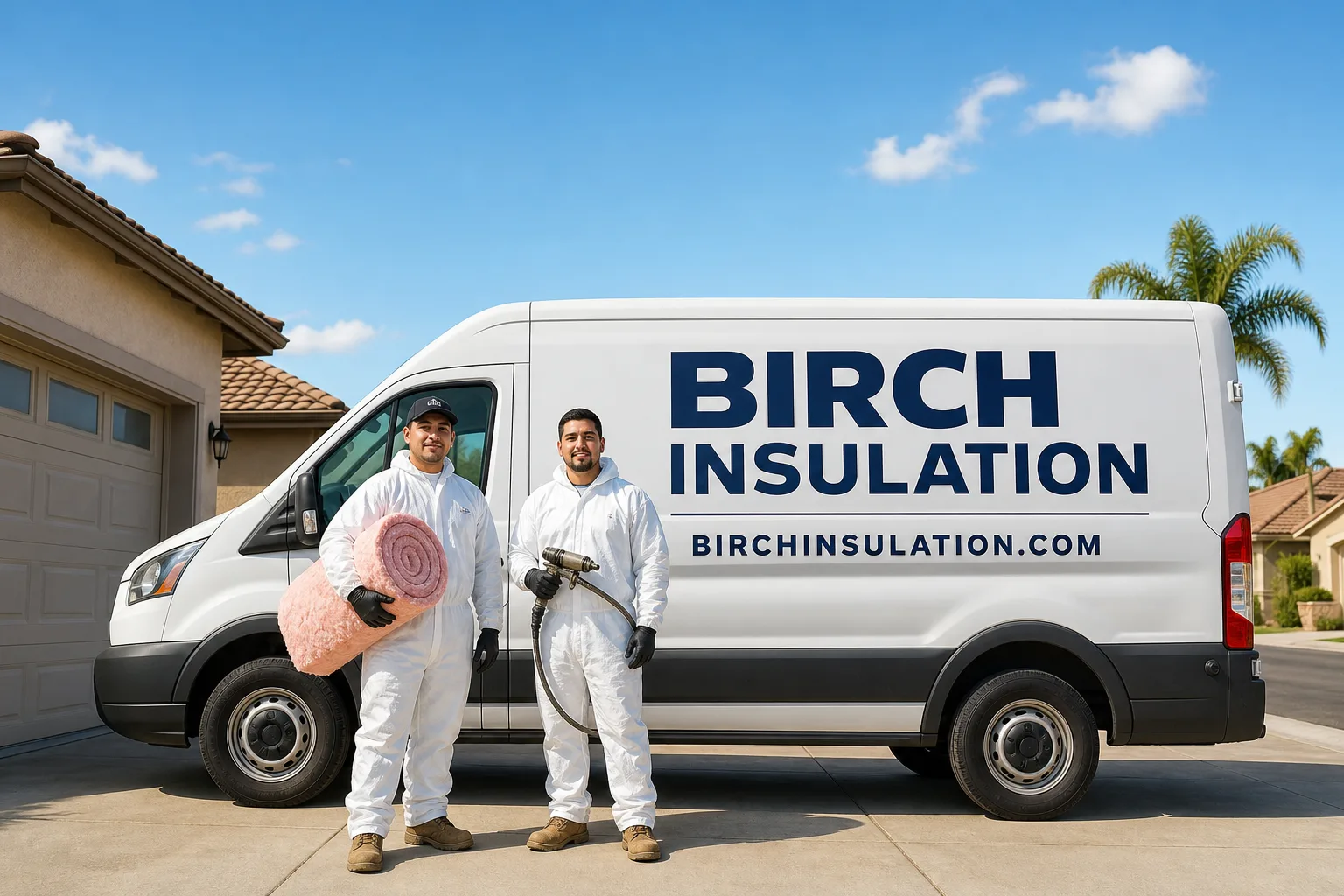
Fast, Reliable Spray Foam Insulation Across Running Springs
Spray foam insulation in Running Springs typically runs $2.50 to $5.50 per board foot installed, with most mountain cabin jobs landing between $3,800 and $12,000 depending on open-cell versus closed-cell, roofline access, and whether we’re working around existing knee walls. We serve the entire 92382 ZIP code and the neighborhoods off Highway 18, Live Oak Drive, and the Rim of the World corridor. Our crews work the mountain regularly, so we know how cold substrate temps change a foam job, how steep rooflines slow a lift setup, and why air sealing comes before anything else up here. If your cabin is drafty or your energy bills climb every winter, call (866) 511-7592 for a straight answer and a free estimate.
Why Birch Insulation Is Running Springs’s Preferred Spray Foam Insulation Company
Running Springs homeowners call us because we don’t show up with one product and a sales script. Nate Crowley built Birch around a simple idea: carry the right materials and recommend what your home actually needs. That matters more at 6,000 feet than it does down the hill. A mid-century cabin off Highway 330 has different insulation needs than a newer build in Arrowbear or a remodel near Green Valley Lake Road. Our Spray Foam Insulation team has worked enough of these structures to know when open-cell makes sense, when closed-cell is the only defensible call, and when spray foam isn’t the right material at all. That last part is what separates us from a lot of contractors.
We carry both Icynene and Demilec spray foam, plus Rockwool, GreenFiber, Owens Corning, and Johns Manville across other methods. No one brand drives the recommendation. Your roof deck, your heating system, your condensation pattern, and your budget do. Running Springs customers who’ve worked with us range from full-time residents tired of cold floors to second-home owners who only see the property between snowmelt and fire season. Same standard either way: material-matched, air-sealed first, documented work.
Spray Foam Insulation Contractors in Running Springs
Spray Foam Insulation Contractors in Running Springs do more than point a gun at a roof deck. Around here the job usually starts with finding why the last insulation effort failed. On older wood-framed cabins, that means checking for unsealed knee walls, no vent channel at the eave line, and substrate temperatures that will wreck a foam cure in winter. A basic rim joist or band board job in Running Springs often lands between $900 and $2,400. Full attic roofline work runs higher, usually $4,500 to $10,000 depending on square footage and prep.
Vaulted Ceiling and Knee Wall Work
Open-beam and vaulted ceilings are common up here, and they’re where most spray foam jobs go sideways if the prep is skipped. Closed-cell on the underside of roof sheathing does its job, but only if we’ve addressed venting first. Otherwise you’ve trapped the moisture that was already causing problems.
Cold-Weather Prep and Cure Windows
Closed-cell foam needs substrate temps around 60°F or above to cure correctly. If a Running Springs homeowner wants this done in January, we pre-warm the space or we schedule around the weather. Spraying into a cold, unheated cabin produces an off-ratio sticky mess that has to be cut out and redone. We’d rather tell you to wait three weeks than bill you twice.
Spray Foam Attic Insulation in Running Springs
Spray Foam Attic Insulation in Running Springs usually means one of two projects: sealing and insulating a vented attic floor, or converting a vaulted open-beamed ceiling to a hot roof assembly. The first is more affordable and often runs $1,800 to $4,500 in the 92382 area. The second is more involved and typically lands between $6,000 and $14,000 because it demands scaffolding, careful gun work around beams, and real attention to the eave-to-ridge vent path.
Ice Dam and Condensation Corrections
Mountain attics here collect problems that flatland attics never see. Snow sits on the roof through January, interior heat escapes through gaps, the snowpack melts at the sheathing line, refreezes at the eave, and the ice dam lifts your roofing material. Before we add any foam, we air-seal and confirm venting so the assembly can actually dry. Foam over an unsealed, unvented attic hides the symptom and accelerates the rot.
Insulating Around Existing Structure
Mid-century cabins in Running Springs often have limited access. We work around beams, posts, and steep pitches daily. The plan has to respect the framing. Some cavities get closed-cell for structure and air sealing. Some get open-cell where we need the assembly to breathe. The point is that the material changes by location within the same house.
Trusted Brands We Service in Running Springs
We stock and install Icynene and Demilec spray foam, two of the most widely specified foam lines in North America, and we match them to the job. Closed-cell Demilec often fits Running Springs roof decks where snow load and structural rigidity matter. Open-cell Icynene goes into interior knee-wall cavities and sound-sensitive areas where you still want airflow and drying potential. We also carry GreenFiber cellulose and Rockwool mineral wool for Running Springs homes where foam would trap moisture against old wood siding. Having eight manufacturers on the truck means nobody sells you a product that doesn’t belong on your house.
Common Spray Foam Insulation Problems We See in Running Springs Homes
- Cold-cure failures. Someone sprays closed-cell in an unheated cabin in December, substrate is 48°F, and the foam never sets right. It stays tacky, shrinks, and requires full removal. We pre-warm or reschedule.
- Trapped moisture behind old wood siding. Foam applied over unsealed siding with no vent path locks in the condensation that was already feeding ice dams. The wall gets wetter, not drier. Air sealing and venting have to happen first.
- Knee walls that got skipped. The main attic gets foamed, but the short walls where the roofline meets the floor get ignored. In Running Springs cabins, that’s where a big share of winter heat loss and interior condensation actually originates.
- Foam on the wrong side of a vaulted assembly. Closed-cell sprayed tight against sheathing with no vent channel means snowmelt has nowhere to go. We see this on remodels done by down-the-hill crews who didn’t think about snowpack.
Pricing for Spray Foam Insulation in Running Springs, CA
A typical rim joist or band board job in Running Springs runs $900 to $2,400. Open-cell attic work generally lands between $1,800 and $4,500. Closed-cell roofline or vaulted ceiling projects range from $6,000 to $14,000 depending on access, square footage, and how much prep the framing needs. What moves the price up here: steep pitches that require staging, pre-warming an unheated cabin in winter, and corrective work where previous insulation or condensation damage needs addressing first. We give free estimates with a clear line-item scope. Call (866) 511-7592 and we’ll talk through your cabin’s specifics.
We Also Serve Cities Near Running Springs
Our Running Springs work frequently extends down the mountain to Lake Arrowhead, Crestline, Highland, and Mentone, where housing stock and elevation vary but the insulation challenges often rhyme. If your home sits in one of those communities, we’ll bring the same material-matched approach without subcontracting. Call (866) 511-7592 to see if we’re on the mountain that week.
Serving Running Springs, CA — Our Local Coverage Area
We’re based in the Running Springs area and know this community well. Use the map below to see our service coverage — if you’re nearby, we can almost certainly help.
FAQs About Spray Foam Insulation in Running Springs
Yes, but only if the substrate temperature is above roughly 60°F, so for most winter jobs we pre-warm the space first. Closed-cell foam sprayed on a cold surface won’t cure properly and has to be removed. We’ll tell you honestly whether to schedule now or wait for a warmer week. Call (866) 511-7592 for a site-specific answer.
Spray foam alone won’t. Ice dams and condensation are driven by air leaks and missing vent paths. We air-seal and vent the knee walls and eaves before any foam goes in, then match the foam type to the assembly so the structure can dry. That sequence is what actually breaks the cycle. Call (866) 511-7592 to walk through your roofline.
Closed-cell spray foam is often the strongest candidate for a vaulted Running Springs roof because it adds both R-value and structural rigidity, and it handles the snow season well when installed correctly. But the ceiling assembly has to have proper venting addressed first. We’ll inspect what’s behind the beams and give you a straight recommendation. Call (866) 511-7592.
We install both Icynene and Demilec spray foam. Closed-cell Demilec typically goes on roof decks and exterior-facing surfaces. Open-cell Icynene works well in interior knee-wall cavities where drying potential matters. The brand follows the job, not the other way around. Call (866) 511-7592 and we’ll explain which one fits your cabin.
Yes, most remodels and additions in Running Springs have to meet current Title 24 energy requirements, and that affects insulation levels, air sealing details, and sometimes which foam type makes sense for your assembly. We plan foam work around those requirements so you pass inspection without rework. Call (866) 511-7592 for a free estimate that includes code considerations.
Running Springs sits above 6,000 feet, which means spray foam has to survive both a heating-dominated snow winter and intense high-altitude summer sun. Two-pound closed-cell foam sprayed in a cold, unheated mid-century cabin won’t cure properly below roughly 60°F substrate temperature, so winter jobs often need the space pre-warmed first. On a mid-century cabin off a steep wood-framed roofline in the Running Springs area, we opened a vaulted open-beam ceiling to find the original insulation all but gone and heavy condensation staining on the wood siding side. Before we sprayed anything, we air-sealed and vented the knee walls to break the ice-dam cycle, then applied closed-cell foam to the sloped rafters and open-cell Icynene to the interior knee-wall cavities so the assembly could still dry. The owners reported the cabin finally holding heat through the snow season and far less interior condensation. That’s the difference between spraying foam and fixing a house.
If you’re in Running Springs, Lake Arrowhead, Crestline, Highland, or Mentone and you want a straight answer about your cabin’s insulation, call (866) 511-7592 for a free estimate. We’ll tell you what we’d do if it were our place.
Written by Nate Crowley, Owner at Birch Insulation, serving Running Springs and the San Bernardino Mountains.